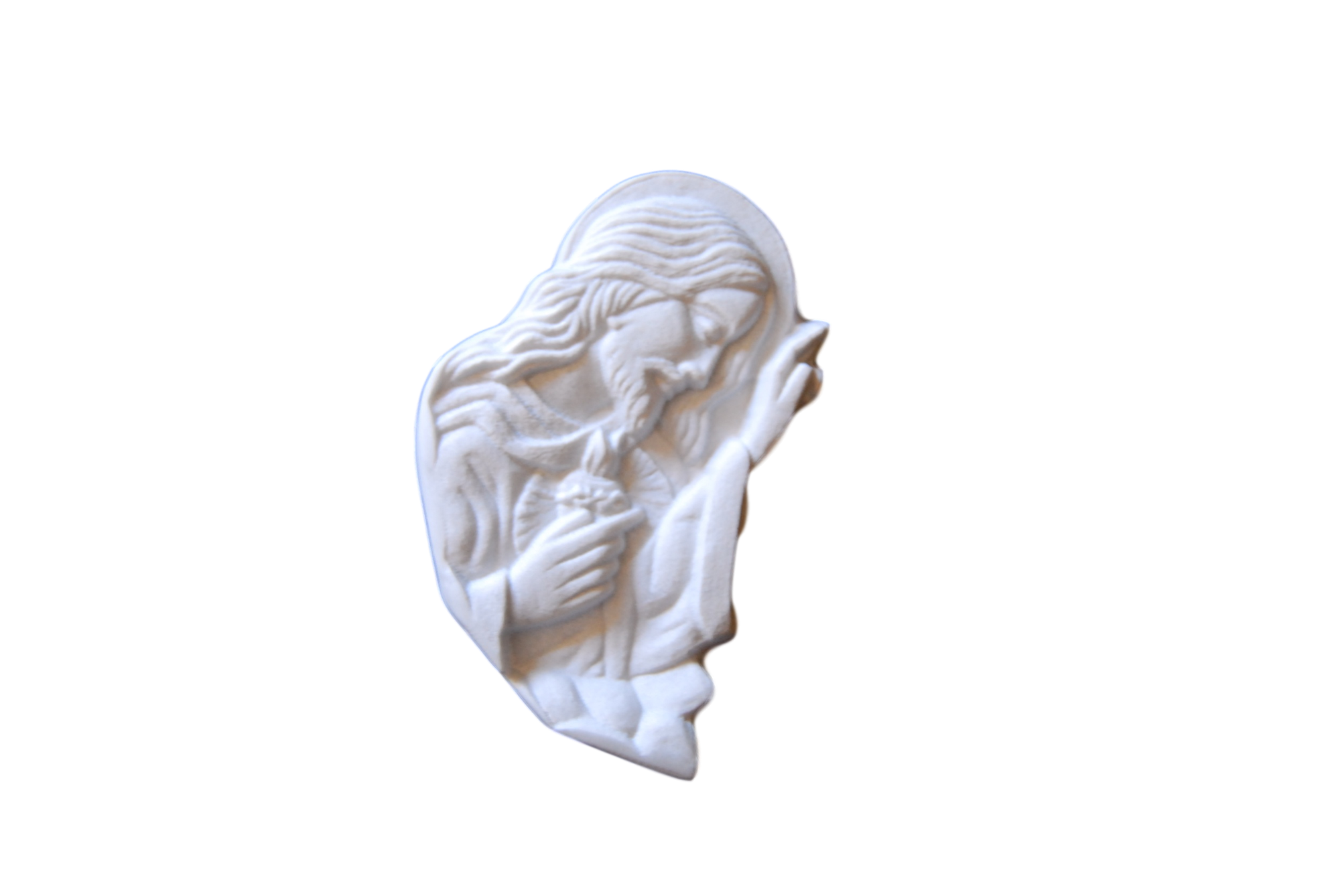
Marble sculpture (bas-relief) depicting the Sacred Heart of Jesus made of natural White Carrara marble. If you want a sculpture with dimensions other than those proposed by us, you can send an e-mail by clicking on the envelope at the bottom right of the screen describing the dimensions you want, we will reply by proposing the cost of the sculpture.
45.00€
- Brand: Two Angels
- SKU: HB1009.SCU
- Shipping:
- Return Policy: Right of Withdrawal Dear site visitor and customer, pursuant to Legislative Decree 206/2005 ("Consumer Code") and Legislative Decree 21/2014 ("Consumer Rights"), we wish to inform you that purchase contracts concluded online are considered "distance contracts." You therefore have the right to withdraw from the order by returning the purchased goods at your own expense, without having to provide any explanation and in compliance with the following conditions. Company Information The supplier of the purchased goods is Dueangeli Arte e Restauro, to which the returned goods must be returned. Our contact details are provided on the Contact page. Methods and Timeframes You may exercise your right of withdrawal within 14 working days of receipt (delivery) of the purchased goods. To exercise this right, you must notify us of your intention to withdraw from the contract within this period. The communication must be made in writing, via email, indicating: the buyer's personal details, a declaration of intent to exercise the right of withdrawal, the product(s) for which the right of withdrawal is being exercised, and the IBAN code to allow for the refund of the amount paid (if the refund is to be made via bank transfer). For example, you can use this wording: I, the undersigned, pursuant to Legislative Decree 206/2005 and subsequent amendments, wish to exercise the right of withdrawal for the following items purchased on and delivered on: . You must therefore arrange, at your own expense, for the return of the requested product(s), in perfect condition and in the original packaging. Shipment must occur within 14 working days of written notification of the intent to exercise the right of withdrawal. Shipment may be made via any carrier of your choice; Alternatively, you can return the purchase in person or request that Dueangeli Arte e Restauro send its own courier. In this case, you retain your right to know in advance the cost of returning the item. Exclusions: The right of withdrawal is excluded and cannot be exercised if one or more of the following conditions apply: – use, even partial, of the item and/or its consumables; – missing parts of the original packaging, both external and internal; – missing integral parts or component parts of the item; – the returned item is damaged for reasons not attributable to the transport during the return process. In the above cases, Dueangeli Arte e Restauro reserves the right to refuse, in whole or in part, a refund of the sums paid for the purchase of the returned item. Furthermore, returns of purchased items will not be accepted in the following cases: – purchase of the item with a VAT number; – purchase of a product customized at the customer's request or made to measure; – purchase of a product not in the catalog or no longer in the catalog (as the product is non-replicable), such as second-choice items, defective items, items whose technical characteristics have been modified and are no longer feasible, items from exhibitions, prototypes; – purchase made directly at our factory, after inspecting the item, even in the case of subsequent shipment by courier (as, in this case, it is not a distance purchase). Refunds Dueangeli Arte e Restauro will refund the amount using the same payment method used for the purchase, or by bank transfer or other agreed-upon payment method, subject to verification as indicated in the "Exclusions" section. The refund will be processed as quickly as possible, once the integrity of the returned item has been inspected. Shipping costs incurred for returning the item are your responsibility and will not be refunded.
More information
Se desiderate una scultura con misure diverse da quelle proposte potete inviare un e-mail con le dimensioni, vi risponderemo proponendovi il costo della scultura.
La particolare resistenza del materiale permette di posizionarla anche all'esterno.
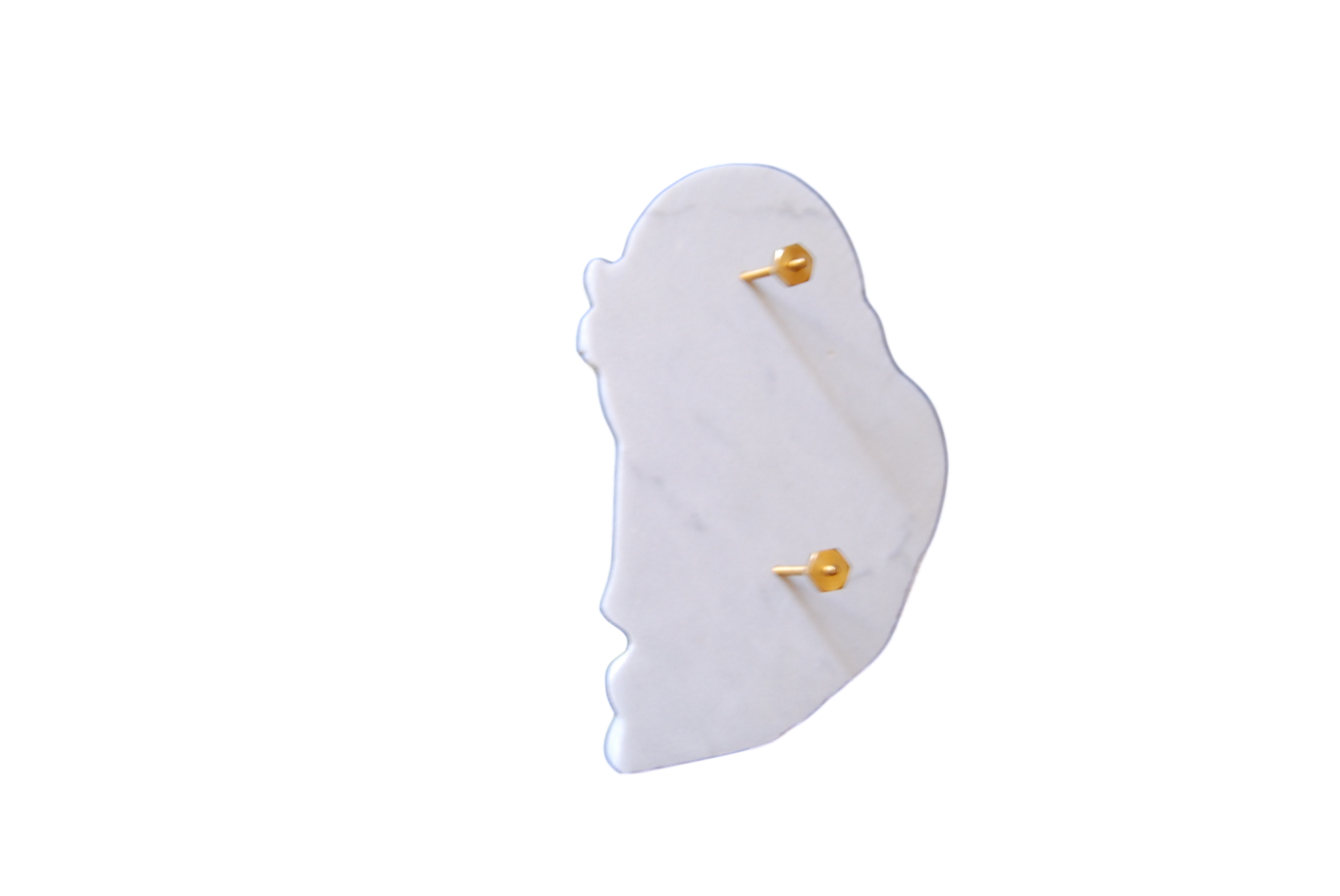
la scultura vi viene fornita con due spinette filettate e relativi dadi in ottone che serviranno per il fissaggio.
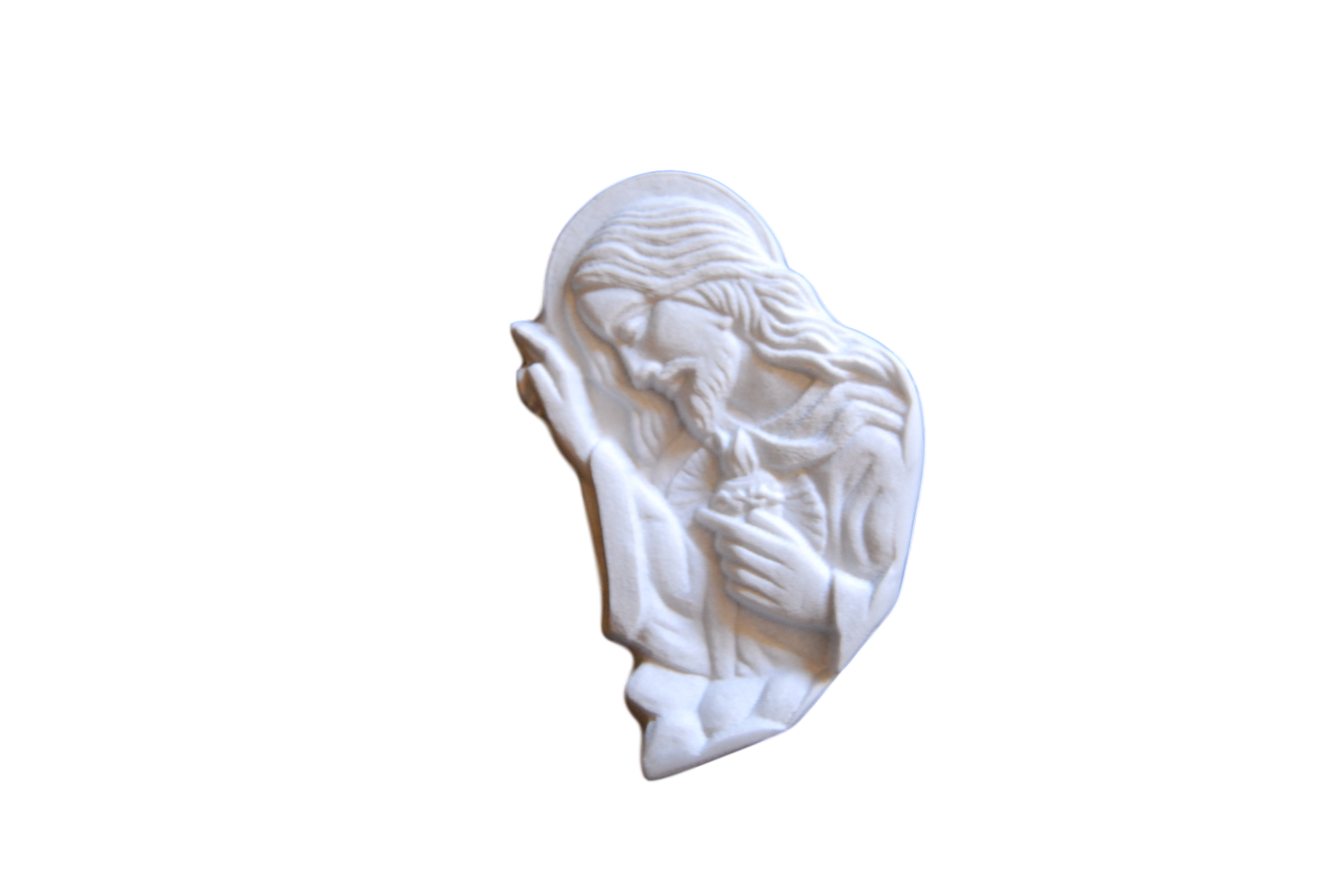
Il marmo di Carrara (per i Romani marmor lunensis, "marmo di Luni") è un tipo di marmo, estratto dalle cave delle Alpi Apuane in territorio di Carrara, universalmente noto come uno dei marmi più pregiati.
Le cave di pietra delle Alpi Apuane erano probabilmente già utilizzate durante l'età del Ferro dai Liguri di Ameglia (località Cafaggio, SP). La necropoli di questo sito, a pochi chilometri a sud-ovest della colonia romana di Luna, è datata al IV secolo a. C. Il sito è caratterizzato da sepolture a incinerazione poste entro cassetta (cista) di lastre di pietra scistosa provenienti dal vicino promontorio del Corvo, ove sono pure presenti giacimenti di marmo bianco. Non a caso, la seconda fase di utilizzo del cimitero (I - II secolo d.C.), presenta cremazioni, ma pure sepolture a inumazione nella nuda terra con una rudimentale cassa di copertura composta da materiali di recupero; fra di essi, appunto, frammenti di marmo.
L'attività estrattiva vera e propria si sviluppò a partire dall'epoca romana, e conobbe il maggiore sviluppo sotto Giulio Cesare(48-44 a.C.).
L’esportazione, che avveniva tramite il porto di Luni(ragion per cui il marmo delle Alpi Apuane è detto, in archeologia, marmo lunense), assunse allora un’entità tale da rifornire le maestranze preposte alla costruzione delle maggiori costruzioni pubbliche di Roma e del suo impero e di numerose dimore patrizia.
Delle cave più antiche, distribuite nei bacini di Torano, Miseglia e Colonnata, non resta molto, poiché l’attività estrattiva protrattasi nei secoli ha causato la loro progressiva distruzione. In tal modo, cave come quella di Polvaccio e Mandria (Torano) e Canalgrande (Miseglia) sono andate perdute. Sono, invece, ancora integre le cave di La Tagliata (Miseglia) e Fossacava (Colonnata).
Dal V secolo l'attività estrattiva subì un periodo di stasi a seguito delle invasioni barbariche. Più tardi, con la maggiore diffusione del cristianesimo, il marmo fu richiesto in grandi quantità per l'edificazione degli edifici religiosi e per il loro arredo interno.
La fervente attività delle cave si dovette soprattutto ai Maestri comancini, a Nicolae a Giovanni Pisani, che lo utilizzarono per le loro opere nell'Italia centrale.
Durante il Rinascimento fu il marmo utilizzato da Michelangelo, che veniva a scegliere personalmente i blocchi su cui lavorare.